Understanding Hair Shedding vs Breakage
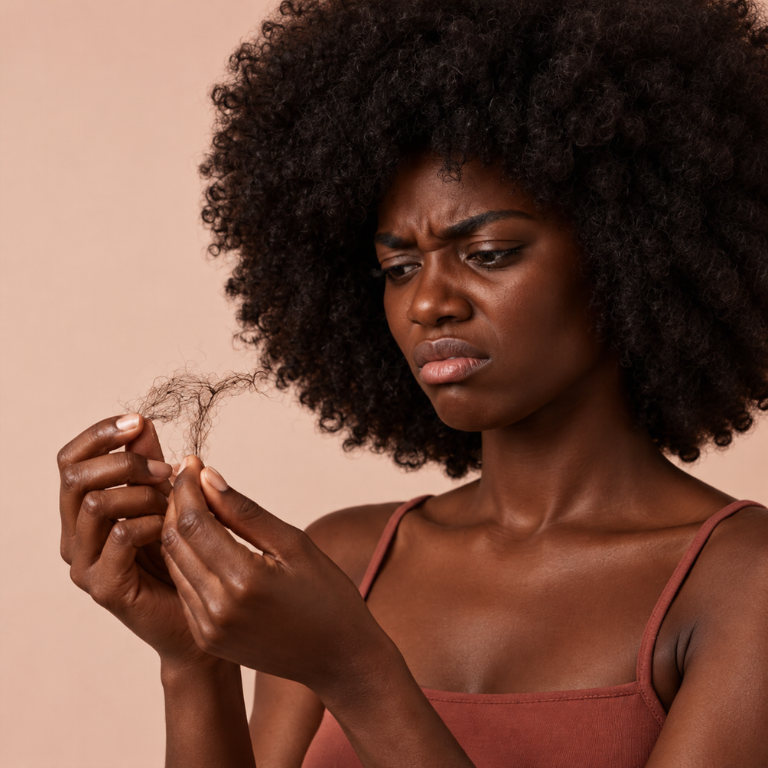
Although both can make hair appear thinner, hair breakage and hair shedding are different concerns. Understanding the difference can help you choose a suitable haircare routine.
Whether your hair is straight, wavy, curly, coily, natural, relaxed or colour-treated, this Natural Oil Bar guide explains what to look for and how to care for vulnerable strands.
What Is Hair Shedding?
Hair shedding is a normal part of the hair growth cycle. Individual hairs grow, rest and eventually fall out as new hairs develop.
It’s common to shed approximately 50–100 hairs daily, although this varies. People who wash or detangle less frequently may notice several days’ worth of shed hair during one wash.
Shed hairs are generally full-length strands that have detached from the follicle. Sometimes a small pale bulb is visible at one end.
What Causes Excessive Hair Shedding?
- Hormonal changes, including those following childbirth
- Illness, fever or significant physical stress
- Iron deficiency and other nutritional deficiencies
- Rapid weight loss or restrictive dieting
- Thyroid conditions and certain medications
- Significant emotional stress
Excessive shedding may become noticeable several months after a triggering event. Sudden or persistent shedding, bald patches, scalp inflammation or noticeable thinning should be assessed by a healthcare professional.
What Is Hair Breakage?
Hair breakage occurs when weakened strands snap along their length rather than naturally falling out from the follicle.
Signs may include shorter pieces of hair, split ends, uneven lengths, excessive tangling, roughness or brittle-feeling strands.
Breakage can make it difficult to retain length even when hair continues growing normally.
Common Causes of Hair Breakage
- Frequent heat styling at high temperatures
- Bleaching, relaxing and other chemical treatments
- Rough brushing or detangling
- Tight hairstyles and excessive tension
- Repeated friction and manipulation
- Inadequate conditioning and poor manageability
- Continuing to style already damaged hair
Hair Breakage vs Hair Shedding: How Can You Tell?
| Hair Shedding | Hair Breakage |
|---|---|
| Hair detaches from the follicle. | Hair snaps along the shaft. |
| Often appears as full-length strands. | Often appears as shorter pieces. |
| May have a small pale bulb at one end. | Usually has no root bulb. |
| May relate to the hair cycle or internal factors. | Often relates to heat, chemical or mechanical damage. |
These are useful clues rather than a definitive diagnosis. It’s possible to experience shedding and breakage simultaneously.
Why Deep Conditioning Matters for Hair Breakage
Deep conditioning is an important part of caring for dry, damaged or difficult-to-manage hair. Well-conditioned strands generally have better slip and are easier to detangle, helping reduce unnecessary friction and snapping during styling.
Some masks focus on moisture and softness, while others are designed to improve the strength and condition of damaged hair.
Choosing the right treatment depends on whether your hair primarily needs conditioning, damage-focused repair or a combination of both.
Moisturizing Masks vs Bond-Repair Treatments
Moisturizing masks help improve softness, smoothness and manageability. They are especially useful when hair feels dry, rough or prone to tangling.
Bond-repair treatments are formulated to address particular types of damage within the hair structure. They may be especially useful for hair affected by bleaching, chemical processing or repeated styling.
These products serve different purposes and can complement one another. A bond-repair treatment does not automatically replace a moisturizing conditioner.
Recommended Deep Conditioners and Hair Repair Treatments
1. Olaplex No. 3 Hair Perfector
Olaplex No. 3 is a
pre-shampoo
It is particularly useful for hair affected by bleaching, colouring, chemical processing or repeated heat styling. It is not a traditional moisturizing conditioner and should be used according to its directions.
Best for: Weak, damaged or chemically processed hair.
Shop Olaplex No. 3 Hair Perfector →
2. K18 Leave-In Molecular Repair Hair Mask
K18 Leave-In Molecular Repair Hair Mask is an innovative treatment designed to help repair hair damage caused by bleaching, colouring, chemical treatments and heat styling.
Powered by patented K18PEPTIDE™, this treatment helps restore strength, softness and elasticity to damaged hair.
Unlike traditional deep conditioners, K18 is a leave-in molecular repair treatment. Apply it after shampooing, without using conditioner beforehand. Wait four minutes before applying other styling products, following the product instructions.
Best for: Chemically processed, heat-damaged, weakened or brittle hair.
Shop K18 Leave-In Molecular Repair Treatments →
2. Olaplex Hair Masks
Olaplex conditioning masks complement damage-focused routines by improving softness, manageability and the overall feel of the hair.
They are useful additions when hair needs extra conditioning alongside strengthening treatments.
Best for: Hair needing conditioning and damage-focused care.
3. Redken Acidic Bonding Concentrate Range
Redken Acidic Bonding Concentrate is a damage-focused haircare range designed to support stronger, smoother and more manageable hair.
Its conditioning and treatment products can be incorporated into routines for hair affected by colouring, chemical services or repeated styling.
Best for: Damaged, colour-treated or chemically processed hair.
Explore Redken Acidic Bonding →
4. Camille Rose Algae Renew Deep Conditioner
Camille Rose Algae Renew is a rich conditioning treatment formulated with ingredients including cocoa butter and mango butter.
It helps soften dry hair and improve manageability, making detangling easier. Hair that benefits from richer conditioning formulas may particularly enjoy this treatment.
Best for: Dry, rough or difficult-to-manage hair.
Shop Camille Rose Algae Renew →
5. Amika The Kure Intense Bond Repair Mask
Amika The Kure is a damage-focused hair mask designed to improve hair strength and help reduce breakage.
It’s a useful choice for hair weakened by heat styling, colouring or other damaging treatments.
Best for: Damaged and brittle-feeling hair.
6. Amika Soulfood Nourishing Mask
Amika Soulfood Nourishing Mask is designed to deeply condition hair, helping improve softness and manageability.
It’s an option for hair that needs moisture-focused conditioning rather than primarily bond-repair care.
Best for: Dry hair needing softness and conditioning.
7. Kérastase Hair Masks
Kérastase offers targeted conditioning treatments for different hair concerns, including dryness, damage and colour-treated hair.
Kérastase Chroma Absolu Masque Chroma Filler, for example, is designed for sensitized or damaged colour-treated hair, particularly medium to thick hair.
Best for: Hair needing targeted salon-style conditioning.
Shop Kérastase Chroma Absolu Masque →
8. Briogeo Don’t Despair, Repair! Deep Conditioning Mask
Briogeo Don’t Despair, Repair! is a deep-conditioning treatment designed for dry and damaged hair.
It combines conditioning and strengthening-focused ingredients to help improve softness, manageability and the appearance of damaged strands.
Best for: Dry, damaged or brittle-feeling hair.
Explore Briogeo Don’t Despair, Repair! →
9. Miche Beauty Indulge Deep Conditioner
Miche Beauty Indulge is a rich, protein-free moisturizing deep conditioner designed to soften dry, damaged and frizzy hair.
Its formula includes ingredients such as honey, olive oil and babassu oil. It provides slip to help make tangles easier to work through and leaves hair feeling softer and more manageable.
This makes it a great option when your hair needs moisture-focused conditioning rather than a protein treatment.
Best for: Dry, frizzy or tangled hair needing rich moisture and softness.
Why Leave-In Conditioners Matter
While deep conditioners are usually rinsed out, leave-in conditioners remain on the hair to provide additional conditioning, improve manageability and make styling easier.
A suitable leave-in can help reduce friction during detangling and keep hair feeling softer between wash days.
Fine hair may prefer lightweight formulas, while thicker or more textured hair may benefit from richer options. The ideal product depends on your hair’s condition and how it responds.
Recommended Leave-In Conditioners and Smoothing Treatments
1. Amika Hydro Rush Intense Moisture Leave-In Conditioner
A moisture-focused leave-in designed to hydrate, soften and improve hair manageability.
Shop Amika Hydro Rush Leave-In →
2. TGIN Green Tea Leave-In Conditioner
A conditioning leave-in designed to support softness, moisture and easier detangling.
Shop TGIN Green Tea Leave-In →
3. It’s a 10 Miracle Leave-In Product
A multipurpose leave-in treatment designed to improve detangling, smoothness and manageability.
Shop It’s a 10 Miracle Leave-In →
4. Mizani 25 Miracle Milk Leave-In Conditioner
A lightweight conditioning treatment designed to support detangling and easier styling, particularly for textured hair.
5. Olaplex No. 6 Bond Smoother
Olaplex No. 6 Bond Smoother is a leave-in styling treatment designed to smooth frizz, improve manageability and help hair feel softer.
It is particularly useful for hair that becomes frizzy, difficult to style or prone to tangling.
Best for: Frizz-prone, dry or damaged hair needing smoother styling and improved manageability.
Shop Olaplex No. 6 Bond Smoother →
6. KeraCare Leave-In Conditioner
KeraCare Leave-In Conditioner is a moisturizing conditioning treatment designed to improve softness, smoothness and manageability.
It can be incorporated into routines for hair that needs extra conditioning support before detangling or styling.
Best for: Hair needing moisture, softness and improved manageability.
Shop KeraCare Leave-In Conditioner →
How to Build a Routine That Helps Reduce Hair Breakage
- Cleanse gently: Use a shampoo suited to your scalp and hair type.
- Deep condition: Choose a moisturizing mask or damage-focused treatment based on your hair’s needs.
- Apply a leave-in: Use an appropriate amount to improve softness and manageability.
- Detangle carefully: Work through knots in small sections, starting near the ends.
- Limit damage: Avoid excessive heat, rough brushing and hairstyles that pull tightly.
- Stay consistent: Follow a manageable routine instead of constantly switching between treatments.
Frequently Asked Questions
How often should I deep condition my hair?
It depends on your hair’s condition and the treatment you’re using. Some people benefit from weekly conditioning masks, while others need them less frequently. Always follow the product’s directions.
Should I use a moisturizing mask or a bond-repair treatment?
If your hair primarily feels dry or difficult to manage, a moisturizing mask may be appropriate. If it has been weakened by bleaching, chemical processing or repeated heat styling, a damage-focused treatment may also be beneficial.
Can I use a hair mask and leave-in conditioner together?
Yes. A rinse-out mask and a leave-in conditioner can complement each other. Choose products and amounts that suit your hair to avoid unnecessary heaviness or buildup.
Why does my hair keep breaking even when I use good products?
Breakage may continue if the hair is repeatedly exposed to damaging practices such as high heat, chemical processing, tight hairstyles or aggressive detangling. Haircare products work best alongside gentler handling and protective styling habits.
Final Thoughts
Hair breakage and hair shedding may look similar, but understanding the difference helps you make more informed decisions about your haircare routine.
While excessive shedding may require professional assessment, many causes of breakage can be managed by improving conditioning, reducing friction and protecting vulnerable strands.
From rich moisturizing masks to damage-focused treatments and leave-in conditioners, Natural Oil Bar offers a wide selection of products for different hair types and concerns.
Explore our haircare collection and discover products suited to your routine.